All Categories - Are Your Like me
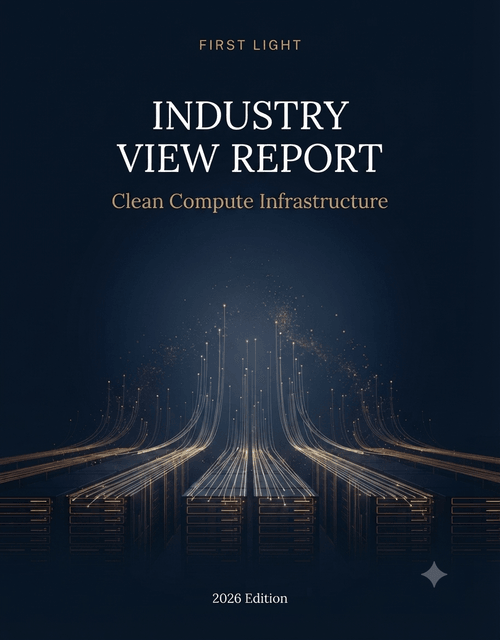
Clean Compute Centers
Compute has become the world's hungriest tenant. Data centers now negotiate for rivers, strain regional grids, and arrive in communities as billion-dollar neighbors that bring heat, noise, and remarkably few jobs. Cities have started saying no — moratoriums, zoning fights, canceled deals — because the current model asks everything of a place and leaves little behind.<br>The tell is the resistance itself: demand for compute at record highs while the buildings that supply it get harder to build. When your growth industry can't get permitted, the model is the problem — not the demand.<br>Inside: why the electron-based data center hit its social and physical ceiling at the same time; what the moratorium wave signals about where compute gets built next; how facilities that run on light — a fraction of the power, no cooling water, solar-capable — rewrite the economics of hosting compute; and who gets to own it, including the communities themselves.<br>This isn't a real estate pitch. It's an industry map for compute's next landlord — written for builders who want to see it first.<br>Your $197 purchase includes one full year of First Light General Membership: member letters and chat, monthly Q&A, and
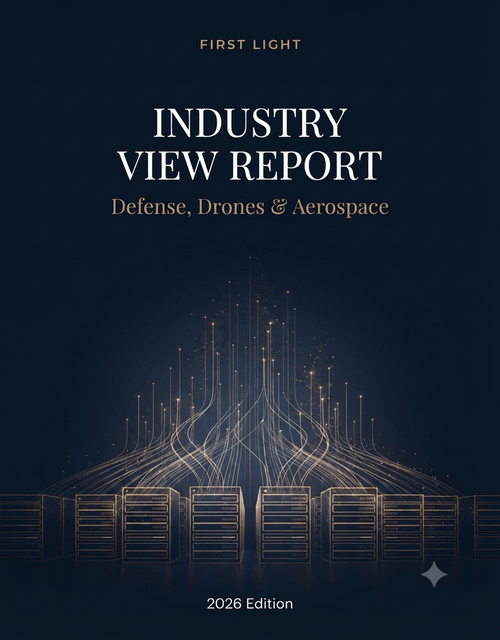
Defense, Drones & Aerospace
Modern conflict is a mathematics of speed: whoever closes the loop from detection to decision first, wins. Yet the deciding systems still run on electronics that must be cooled, shielded, and powered — a burden measured in weight, and weight is the enemy of everything that flies. Meanwhile, a thousand-dollar drone routinely defeats a million-dollar answer.<br>The tell is procurement itself: record defense budgets, while the systems dominating headlines come from startups that didn't exist a decade ago. The primes are being lapped by the garage.<br>Inside: why the detection-to-decision loop decides the rest; how the drone cost curve rewrites defense economics from the bottom up; what light-speed logic — lighter, cooler, harder to jam — changes about what flies and what decides; and who is positioned to own the next defense stack.<br><br>This isn't a war forecast. It's an industry map for the fastest procurement shift in generations — written for builders who want to see it first.<br><br>Your $197 purchase includes one full year of First Light General Membership: member letters and chat, monthly Q&A, and lifetime updates to this report as the numbers move.
Gaming & Interactive Media
Gaming is the largest entertainment industry on earth, and its ceiling is physical. Every player knows the enemy: lag. Every studio knows the compromise: worlds shrunk, physics faked, player counts capped — not for lack of imagination, but because the infrastructure underneath converts, heats, and waits.<br>The tell is where the money goes: studios spend fortunes on servers and still ship games that stutter, while cloud gaming keeps stalling on the same problem — the speed of light is fine; everything electrons touch is not.<br><br>Inside: why real-time worlds break on electron-based infrastructure; what cloud gaming's false starts reveal about where the value sits; how light-speed logic changes what a game can be — persistent worlds, true physics, crowds that don't cap; and who is positioned to own the studios, platforms, and venues of the light era.<br><br>This isn't a game review. It's an industry map for entertainment's next engine — written for builders who want to see it first.<br><br>Your $197 purchase includes one full year of First Light General Membership: member letters and chat, monthly Q&A, and lifetime updates to this report as the numbers move.
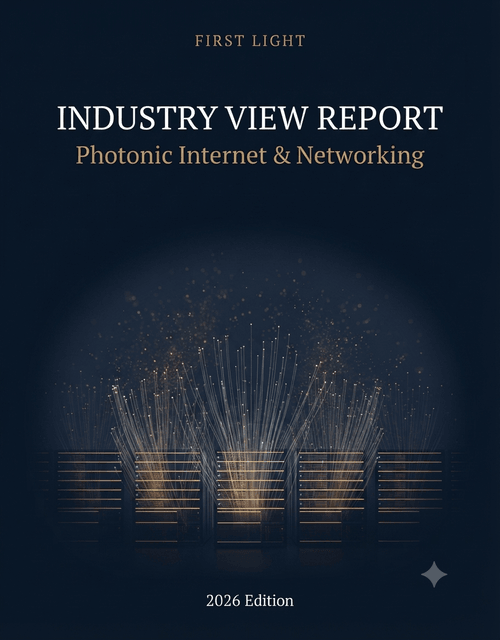
Photonic Internet & Networking
The internet runs on light — until it matters. Data crosses oceans as photons, then stops at every router, switch, and server to become electricity: converted, processed, cooled, converted back. Billions of times a day, the fastest thing in the universe waits in line to become the slowest part of the network. That conversion tax is where the internet's cost, heat, and delay actually live. The tell is the buildout: record spending on fiber and data centers, yet congestion, energy strain, and latency complaints keep climbing. The industry is widening the highway while keeping the tollbooths.<br>Inside: why the conversion layer is the internet's real bottleneck; what the data center construction boom conceals about network economics; how networks that stay in light end-to-end restructure everything from the backbone to the last mile; and who is positioned to own the light-native internet.<br>This isn't a telecom forecast. It's an industry map for the internet's first true rebuild since the router — written for builders who want to see it before their industry does.<br>Your $197 purchase includes one full year of First Light General Membership: member letters and chat, monthly Q&A, and lifetime
Robotics & Autonomy
A robot is a loop: sense, decide, act. Every machine ever built is limited by how fast that loop closes — and today it closes over electronics that are too hot, too heavy, and too power-hungry to put where the decisions are needed. So the industry compromises: intelligence stays in the cloud, the robot phones home, and autonomy fails precisely in the moments when milliseconds decide everything.<br>The tell is on stage: billions flowing into humanoid robots while the demos are still teleoperated. When the body outruns the brain, the brain is the bottleneck.<br>Inside: why the sense-decide-act loop breaks on electron-based compute; what the teleoperation era reveals about where robotics value will actually land; how light-speed logic — small enough, cool enough, fast enough to ride on the machine — changes what a robot can be; and who is positioned to own the autonomy stack.<br>This isn't a gadget preview. It's an industry map for machines that finally think at the speed they move — written for builders who want to see it before their industry does.<br>Your $197 purchase includes one full year of First Light General Membership: member letters and chat, monthly Q&A, and lifetime updates to this r
Cookie Use
We use cookies to ensure a smooth browsing experience. By continuing we assume you accept the use of cookies.
Learn More